It’s a cold, cold, windy day in the Midwest, and we’re staying in for a couple of days while the Blizzard of 2022 passes. It will give us a white Christmas unless the snow blows out of here and heads east to Illinois along with the many inflatable decorations that were not adequately anchored before the storm hit. (Those poor children who think that Santa is coming a day or two early when they see the deflated reindeer soar overhead or find Flat Santa in the yard on Christmas Eve!)
Gray, snowy days always make me feel nostalgic, especially at Christmas. I yearn to play the more melancholy Christmas tunes that are appropriate to Advent. As I get ready once again to welcome the Saviour, the Advent theme of a penitential season to prepare my heart for His coming seems to demand more contemplative music.
I recorded these songs at our church on our Kawai electronic hybrid piano. Bob did the sound recording, but the songs are just as I played them in an empty church. I hope they cause you to welcome Jesus, too. He’s coming again, you know.
“Away in a Manger” is the first Christmas song most children learn, and adults still love it. It begins with a description of the stable scene, and it ends with a prayer that Jesus would watch over us and take us to heaven. This arrangement by Mark Hayes includes several of the various settings of the carol.
“Breath of Heaven” tells of Mary’s reaction to the knowledge that she will give birth to the Saviour. Probably a teenager herself, she pleads for heavenly help as she begins to nurture her son, the Christ. This Mark Hayes arrangement captures the mood of Mary’s prayer.
“Come, Thou Long-Expected Jesus” echoes the plea of the Jews who had been promised the Messiah hundreds of years before and were still waiting. We, like them, are waiting for the Messiah’s promised return. Mark Hayes (Can you tell he’s my favorite arranger?) gives us this contemplative setting.
“Jesus King of Angels” by Fernando Ortega is also a prayer for divine protection. This minimalist setting by Jay Rouse is perfect for a lullaby.
“Mary, Did You Know” has become a new classic, asking us to reflect on what Mary may have known about the life her son Jesus would lead. And yes, I think Mary did know, perhaps not completely, but the Bible says that she “treasured up these things in her heart,” implying that she was careful to remember details about Jesus’s life. Jay Rouse has done a beautiful job of translating this song to piano solo.
“Of the Father’s Love Begotten” is an ancient hymn recounting the Gospel. The song was originally a chant, and it has been adapted by Jay Rouse for modern ears.
“O Holy Night” reminds us that we are to worship Christ just as the shepherds and the Magi did. At the last chorus of this Mark Hayes arrangement remember the words of the song: Christ is the Lord! O praise His name forever!
“The Wexford Carol” is a traditional Irish melody. (You knew I would put in an Irish tune!) Its lyrics are these: Good people all, this Christmas time, Consider well and bear in mind What our good God for us has done In sending His beloved son.
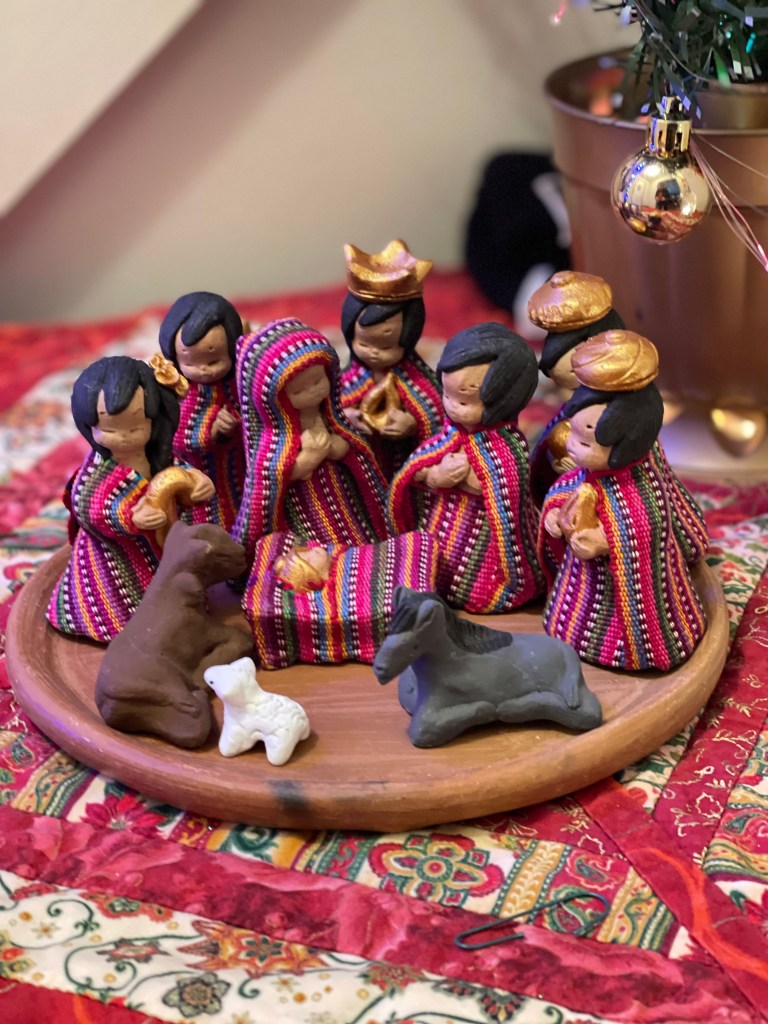
May you and yours have a Merry Christmas and rejoice in the birth of Jesus, our Lord and Saviour!



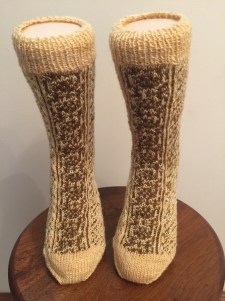 up a new technique on the internet. The competition is worldwide, and I’ve learned that no matter how much I practice, I won’t beat the knitters in Finland. I will, however, place in the top 5 (usually the top 1 or 2) in the United States, if I can clear my schedule.
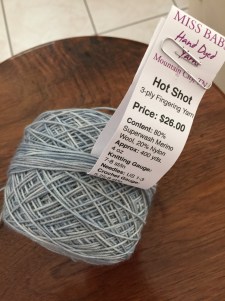 Sock yarn usually is sold in skeins wound like small, heavy ropes. Before you can use the yarn, you need to wind the skein into a ball-like structure, which we call a cake. If you do this by hand, you can use the back of a chair or a helpful friend to help with the process. The best way to wind a cake, however, is to have a swift and a ball winder. The skein fits neatly around the swift, and the ball winder makes short work of winding. A 440-yard skein takes 5 minutes or so to wind, and you’re good to go.
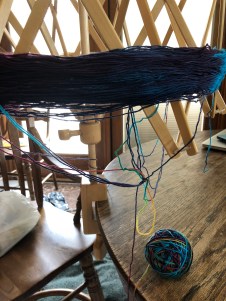 I’ve done this long enough to realize that some companies just don’t tie the skeins properly; their yarn has built-in tangles. The yarn won’t come off the swift smoothly, and the only way to get the yarn into a usable form is to hand-wind it. Sock yarn is expensive. No matter how tempting it might be to just cut out the tangled part (or toss the whole skein), it’s worth the trouble to take the time to wind it properly, turning a mess into a nice ball that soon become a beautiful pair of socks for some lucky person.


 Songs from the Living Room